








CLASSICS
Filters

5 proizvodi
%
15%
CLASSICS
2.124,15 RSD
2.499,00 RSD
0,00 RSD
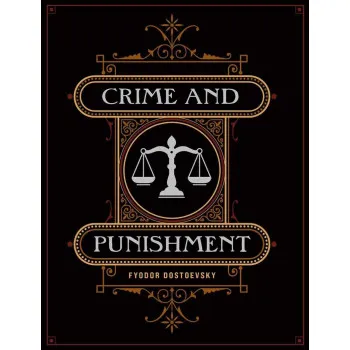
Originally published as a series of monthly installments, readers follow the story of Russian student Rodion Raskolnikov as he ponders killing and stealing from a wealthy but dubious pawnbroker. Raskolnikov finds himself within a perplexing moral dilemma, which only deepens as the story progresses and becomes more complicated, with numerous twists and turns, mental distraction and distress, and a study of familial bonds and poverty.
This collectible edition features:
An elegant faux-leather cover with foil-embossed designs
Stunning sprayed edges for a continuous design on the front, edges, and back
Unabridged text
This collectible edition features:
An elegant faux-leather cover with foil-embossed designs
Stunning sprayed edges for a continuous design on the front, edges, and back
Unabridged text
%
15%
CLASSICS
679,15 RSD
799,00 RSD
0,00 RSD
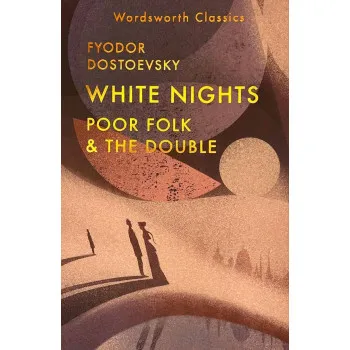
'White Nights' is one of Dostoevsky’s earlier short stories but one of his most enduringly popular. It tells the story of four nights in the life of the lonely narrator, who meets and falls in love with the mysterious and beautiful Nastenka.
Poor Folk was Dostoevsky’s first novel, written to try and alleviate his financial plight, and was a commercial success. It tells the story of Makar Devushkin, a clerk, and Varvara Dobroselova, a seamstress, by means of the letters they exchange; they are in love, but too poor to marry. Its exploration of humanitarian themes led to it being described as Russia’s first ‘social novel’.
By contrast, Dostoevsky’s second novel, The Double was not well received. First published in 1846, it was revised and republished by Dostoevsky in 1866, but he did not consider it a success. By contrast, Vladimir Nabokov called it 'the best thing he ever wrote’ and described it as ’a perfect work of art’.
Poor Folk was Dostoevsky’s first novel, written to try and alleviate his financial plight, and was a commercial success. It tells the story of Makar Devushkin, a clerk, and Varvara Dobroselova, a seamstress, by means of the letters they exchange; they are in love, but too poor to marry. Its exploration of humanitarian themes led to it being described as Russia’s first ‘social novel’.
By contrast, Dostoevsky’s second novel, The Double was not well received. First published in 1846, it was revised and republished by Dostoevsky in 1866, but he did not consider it a success. By contrast, Vladimir Nabokov called it 'the best thing he ever wrote’ and described it as ’a perfect work of art’.

%
15%
CLASSICS
679,15 RSD
799,00 RSD
0,00 RSD
This title is translated by Constance Garnett, with an Introduction by A.D.P.Briggs. As Fyodor Karamazov awaits an amorous encounter, he is violently done to death. The three sons of the old debauchee are forced to confront their own guilt or complicity. Who will own to parricide? The reckless and passionate Dmitri? The corrosive intellectual Ivan? Surely not the chaste novice monk Alyosha? The search reveals the divisions which rack the brothers, yet paradoxically unite them. Around the writhings of this one dysfunctional family Dostoevsky weaves a dense network of social, psychological and philosophical relationships. At the same time he shows - from the opening 'scandal' scene in the monastery to a personal appearance by an eccentric Devil - that his dramatic skills have lost nothing of their edge."The Karamazov Brothers", completed a few months before Dostoevsky's death in 1881, remains for many the high point of his genius as novelist and chronicler of the modern malaise. It casts a long shadow over D.H.Lawrence, Thomas Mann, Albert Camus, and other giants of twentieth-century literature.
%
15%
CLASSICS
679,15 RSD
799,00 RSD
0,00 RSD
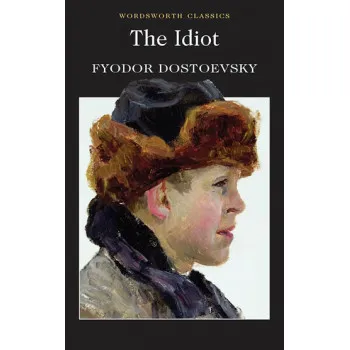
Prince Myshkin returns to Russia from an asylum in Switzerland. As he becomes embroiled in the frantic amatory and financial intrigues which centre around a cast of brilliantly realised characters and which ultimately lead to tragedy, he emerges as a unique combination of the Christian ideal of perfection and Dostoevsky's own views, afflictions and manners. His serene selflessness is contrasted with the worldly qualities of every other character in the novel. Dostoevsky supplies a harsh indictment of the Russian ruling class of his day who have created a world which cannot accomodate the goodness of this idiot.

%
15%
CLASSICS
679,15 RSD
799,00 RSD
0,00 RSD
Crime and Punishment is one of the greatest and most readable novels ever written. From the beginning we are locked into the frenzied consciousness of Raskolnikov who, against his better instincts, is inexorably drawn to commit a brutal double murder. From that moment on, we share his conflicting feelings of self-loathing and pride, of contempt for and need of others, and of terrible despair and hope of redemption: and, in a remarkable transformation of the detective novel, we follow his agonised efforts to probe and confront both his own motives for, and the consequences of, his crime. The result is a tragic novel built out of a series of supremely dramatic scenes that illuminate the eternal conflicts at the heart of human existence: most especially our desire for self-expression and self-fulfilment, as against the constraints of morality and human laws; and our agonised awareness of the world's harsh injustices and of our own mortality, as against the mysteries of divine justice and immortality.