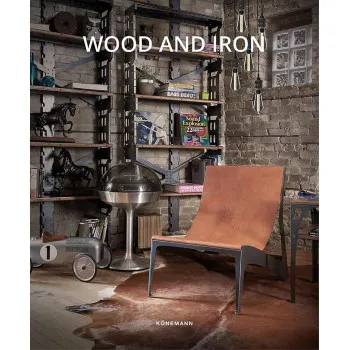
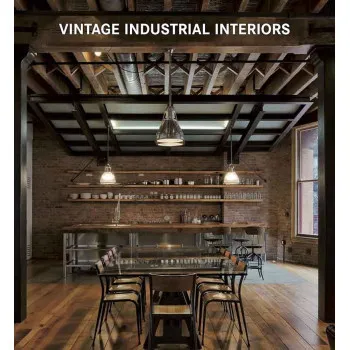
Antique factory spaces are often characterized by their breadth, high ceilings, large windows, and special finishes. This book aims to convey the atmosphere of vintage industrial style and the history and development of industrial furniture design.
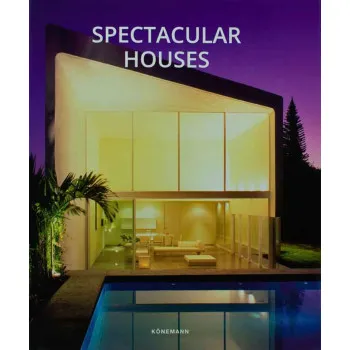
Spectacular Houses is a book that invites you to discover the most impressive and unique residences in contemporary architecture around the world. This book is a tribute to creativity, innovation, and good taste applied to residential design.
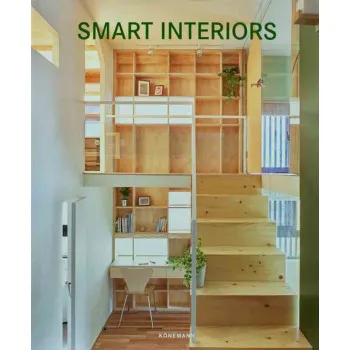
This book is an in-depth and up-to-date exploration of the concept of minimal housing, an idea that, although it emerged more than a century ago, continues to inspire innovative solutions to address contemporary challenges of space, sustainability, and lifestyle.
This book documents a genuine aesthetic and functional revolution that has unfolded in recent years, as home décor has evolved from a matter of fleeting trends into an intimate expression of identity.
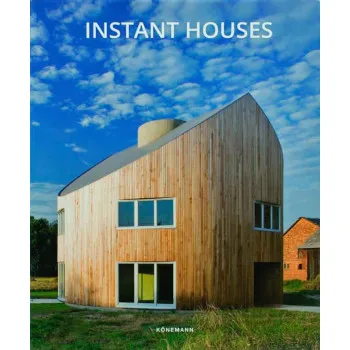
Instant Houses offers a visual and technical tour of prefabricated, modular, and rapidly assembled homes that are redefining the contemporary home. Through innovative projects from around the world, this book shows how technology, design, and sustainability come together to create living spaces in record time, without sacrificing aesthetics or functionality. An essential book for understanding where the housing of the future is headed.
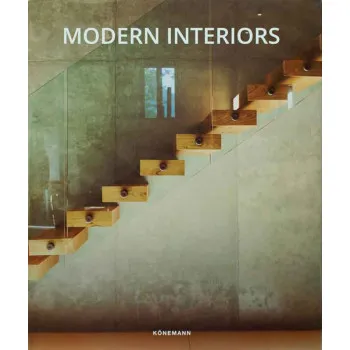
This book captures that evolution through a carefully curated selection of modern interiors that seamlessly blend functionality, aesthetics, and harmony.
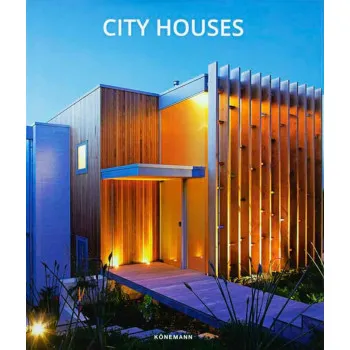
City Houses is a celebration of contemporary urban residential architecture and the creativity with which architects from around the world meet the challenges of building comfortable, functional, and aesthetically striking homes in a contemporary urban setting.
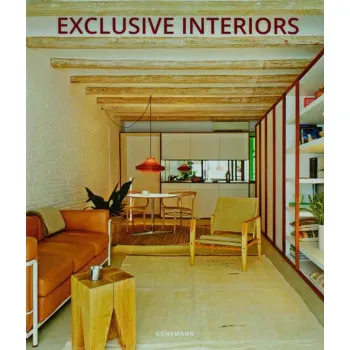
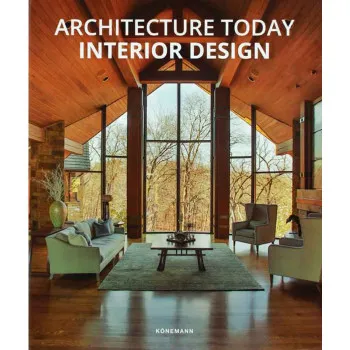
This volume offers a visual and conceptual journey through some of the most outstanding interiors on the contemporary scene, presenting a selection of projects created by renowned designers who redefine the way we inhabit and experience spaces.
As urban areas become increasingly crowded, this series shines a light on the growing popularity of practical small-scale living and "tiny houses."
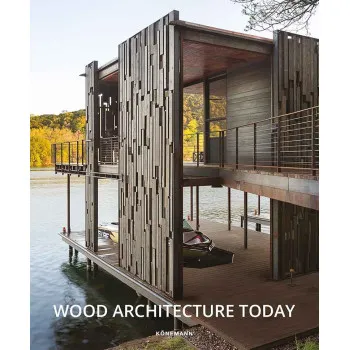
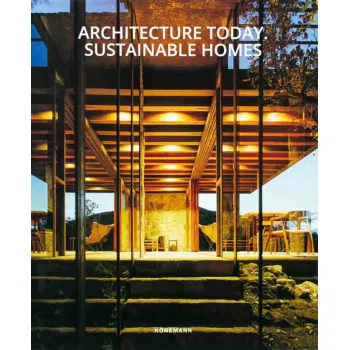
You will find numerous expert tips on clever storage solutions for both expansive and compact apartments. A core focus of the collection is sustainable architecture, highlighting how natural materials like wood and iron can be used to create environmentally conscious and aesthetically striking homes.
This book celebrates the work of 30 architecture studios; singular influential forces are featured alongside emerging talents. Some have been widely awarded and published.
They have offices spread out across the world, promoting their ideals and visions, and creating works that have the power of suggestion and that inspire emotion. The participating architects—through some of their most notable works—offer their own theoretical positions, technical innovations and design contributions to the built world.
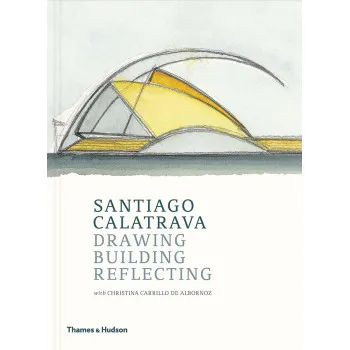
Santiago Calatrava first made a name for himself in the late 1980s with delicately designed structures in Zürich that seem to grow out of the earth. He went on to create a series of highly innovative, iconic bridges across Europe, and in recent years he has drawn attention for such large-scale projects as the City of Arts and Sciences in his birth town, Valencia; the Museum of Tomorrow in Rio de Janeiro; and the World Transportation Hub at Ground Zero in New York.
Originally trained as an engineer, Calatrava has, at heart, always leaned more towards artistic endeavours than purely structural ones: an entire floor of his residence in Zürich is devoted to creating paintings and sculpture, which he has pursued throughout his career. His influences range from art history and natural philosophy to antiquity, and he manages to combine these in buildings that are structurally highly stylized yet somehow timeless.
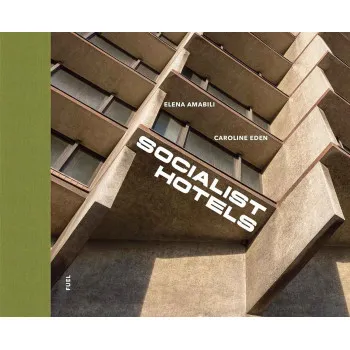
This epic photographic project – spanning 153 hotels across 31 countries – chronicles the architecture of hospitality and leisure in Eastern Europe and the post-Soviet space. Many were built in imposing styles: brutalist and modernist structures emphasising scale, functionality and the power of the state. Quirkier constructions used mosaics, tiles and stained glass as cultural references, to reflect the traditions of individual countries. Collected here for the first time are an amazing range of examples, from the grand Socialist Realism and neoclassical details of the Stalinist era (such as the Interhotel, Georgia) and the Soviet Modernism that marked a shift away from excess towards austere, concrete structures (Hotel Traian, Romania) to the futuristic and gravity defying (Sevan Writers’ House, Armenia).
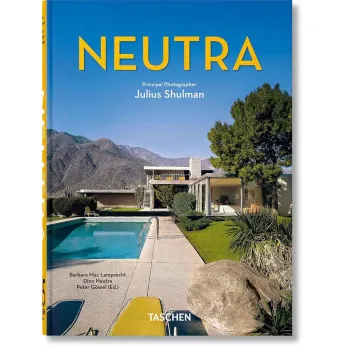
Neutra had a keen appreciation for the relationship between people and nature; his trademark plate glass walls and ceilings which turn into deep overhangs have the effect of connecting the indoors with the outdoors.
His ability to incorporate technology, aesthetics, science, and nature into his designs brought him to the forefront of Modernist architecture.
In this volume, more than 100 of Neutra’s works (private homes, schools, and public buildings) are gathered together, illustrated by hundreds of photographs, including those of Julius Shulman and other prominent photographers.
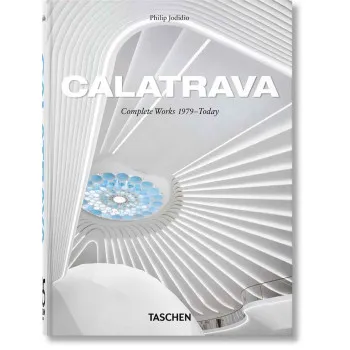
This compact monograph gathers detailed entries, photography, and the original watercolor sketches that set Calatrava aside as a unique creative master.
It includes many of his original collaborative input, and projects such as the Mediopadana Station in Reggio Emilia, Italy, the Museum of Tomorrow in Rio de Janeiro, as well as recent works like the UAE Pavilion at Expo 2020 in Dubai, St. Nicholas Greek Church at Ground Zero in New York and Constellation.
This architecture book features a wide range of buildings, some exhibiting the ultimate ideal of the white Zen cube, while others exemplify the search for the new wow factor in iconic design. In many, cutting-edge modernity is counterbalanced by a concern for sustainability—an issue that has motivated many architects to rethink and reintroduce concepts drawn from traditional Japanese architecture.
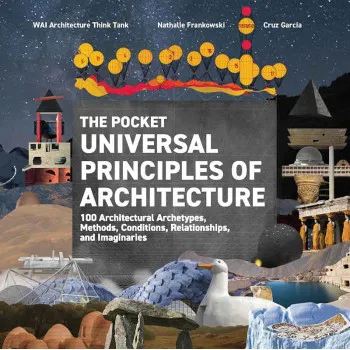
The Pocket Universal Principles of Architecture distills the vast world of design into 100 foundational and visionary concepts that reveal the power, challenges, and transformative role of architecture.
Discover concepts that span the spectrum of architectural possibility, including:
Figurative Archetypes – Timeless forms that shape design.
Parasitic Architecture – Bold structures that adapt and evolve.
Biomimicry – Designs that draw from nature’s genius.
Inclusive Design – Spaces that embrace every body and identity.
AI Cities – Technology-driven urban futures.
Queer Cartographies – Mapping diverse, fluid landscapes.
Intergalactic Architecture – Visionary ideas for cosmic habitats.
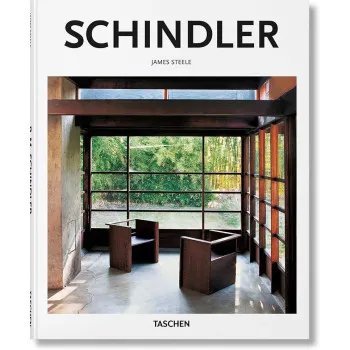
Hailing from Vienna, Rudolph Michael Schindler (1887–1953) emigrated to Chicago in 1914, like his lifelong friend and rival Richard Neutra. Eventually hired by Frank Lloyd Wright to work in Los Angeles, Schindler took cues from notions found in Cubism and the International Style to shape his unique vision: a style he called “space architecture,” combining geometrical shapes, bold lines, and materials such as wood and concrete, with space as a medium in its own right, one to be controlled just like color or mass.
Discover such key projects as the Wolfe House, nestled in a steep hillside; the tree house-like Falk Apartment Building; the Lovell Beach House, recognized as one of the foremost examples of the Modernist canon in America; the Schindler/Chace House, Schindler’s most crucial work
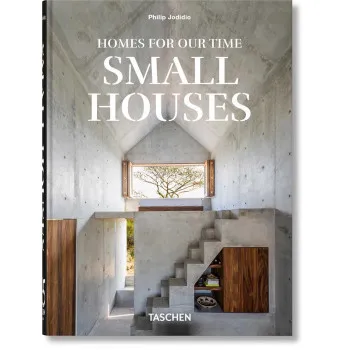
As humanity faces inevitable pressures such as climate change, an increase in population, and strain on resources, these solutions are helping shape what the world may look like in the future.Whether in the dense urban areas of Tokyo, the wilderness of Australia, the woods of Canada, or a rooftop in Ecuador, this is the world of Small Houses. The one common point they share, is that they all have an area of no more than 100 square meters. Spanning 25 countries such as Brazil, Hungary, South Korea, Netherlands, USA, Japan, and Australia, described here there are houses designed by 54 architects.
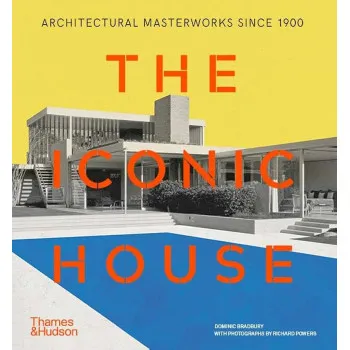
The Iconic House features over 100 of the most important and influential houses designed and built since 1900. International in scope and wide-ranging in style, the houses share a remarkable sensitivity to site and context, an appreciation of local materials and building traditions, and a careful understanding of clients’ needs.
Odabrani artikli na rasprodaji u knjižarama i online do isteka zaliha. Članski i količinski popust se ne obračunava.
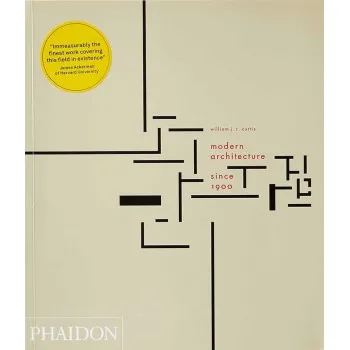
Since its first publication in 1982, Modern Architecture Since 1900 has become established as a contemporary classic. Worldwide in scope, it combines a clear historical outline with masterly analysis and interpretation. Technical, economic, social and intellectual developments are brought together in a comprehensive narrative which provides a setting for the detailed examination of buildings.
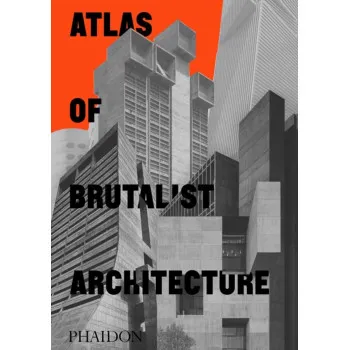
The Brutalist aesthetic is enjoying a renaissance - and this book documents Brutalism as never before. In the most wide-ranging investigation ever undertaken into one of architecture's most powerful movements, more than 850 Brutalist buildings - existing and demolished, classic and contemporary - are organized geographically into nine continental regions.
Cabins combines insightful text, rich photography, and bright, contemporary illustrations by Marie-Laure Cruschi to show how this particular architectural type presents special opportunities for creative thinking. In eschewing excess, the cabin limits actual spatial intrusion to the bare essentials of living requirements, while in responding to its typically rustic setting, it foregrounds eco-friendly solutions. The cabin comes to showcase some of the most inventive and forward-looking practices of contemporary architecture, including Renzo Piano, Terunobu Fujimori, and Tom Kundig, all embracing such distilled sanctuary spaces.
The book begins with a discussion of early prehistoric dwellings and concludes with a description of works by important modern Japanese architects. Along the way it discusses the iconic buildings and architectural styles for which Japan is so justly famous—from elegant Shinden and Sukiya aristocratic villas like the Kinkakuji "Golden Pavilion" in Kyoto, to imposing Samurai castles like Himeji and Matsumoto, and tranquil Zen Buddhist gardens and tea houses to rural Minka thatched-roof farmhouses and Shinto shrines.
A refreshed edition of the plain-speaking yet inspirational architecture primer that encourages the reader to take a broader look at the world around us and how we might shape it.
James Tait has updated his original text with introductions to each section that inspire further creative thinking and understanding. With 18 new pages and 5,000 extra words of text, this revised edition is the perfect way in to the ideas and fundamentals that govern an often impenetrable industry for anyone interested in our built environment.