Robert Grainier is a day labourer in the American West, felling the trees that feed the railways. It is the start of the twentieth century, and the world is changing at a rapid pace. Life is fragile in the wilds of the frontier; disease and forest fires are rife. Buffeted by the loss of his family, Grainier journeys, struggling to make sense of the bewildering changes transforming the nation.
The White Book is a meditation on colour, beginning with a list of white things. But it is also a book about mourning, and of rebirth and the tenacity of the human spirit. It is a stunning investigation of the fragility, beauty and strangeness of life from one of the great literary voices of our time.
Yeong-hye and her husband are ordinary people. He is an office worker with moderate ambitions and mild manners; she is an uninspired but dutiful wife. The acceptable flatline of their marriage is interrupted when Yeong-hye, seeking a more 'plant-like' existence, decides to become a vegetarian, prompted by grotesque recurring nightmares.
In South Korea, where vegetarianism is almost unheard-of and societal mores are strictly obeyed, Yeong-hye's decision is a shocking act of subversion. Her passive rebellion manifests in ever more bizarre and frightening forms, leading her bland husband to self-justified acts of sexual sadism.
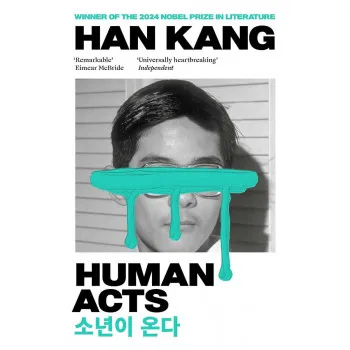
Gwangju, South Korea, 1980. Amid a violent student uprising a young boy named Dong-ho is killed. As his friend searches for Dong-ho's corpse, we also meet an editor struggling against censorship, a prisoner and a factory worker, each suffering from traumatic memories, and Dong-ho's grief-stricken mother. Through their collective heartbreak and acts of hope comes a tale of a brutalised people in search of a voice.